The Old Gaol House
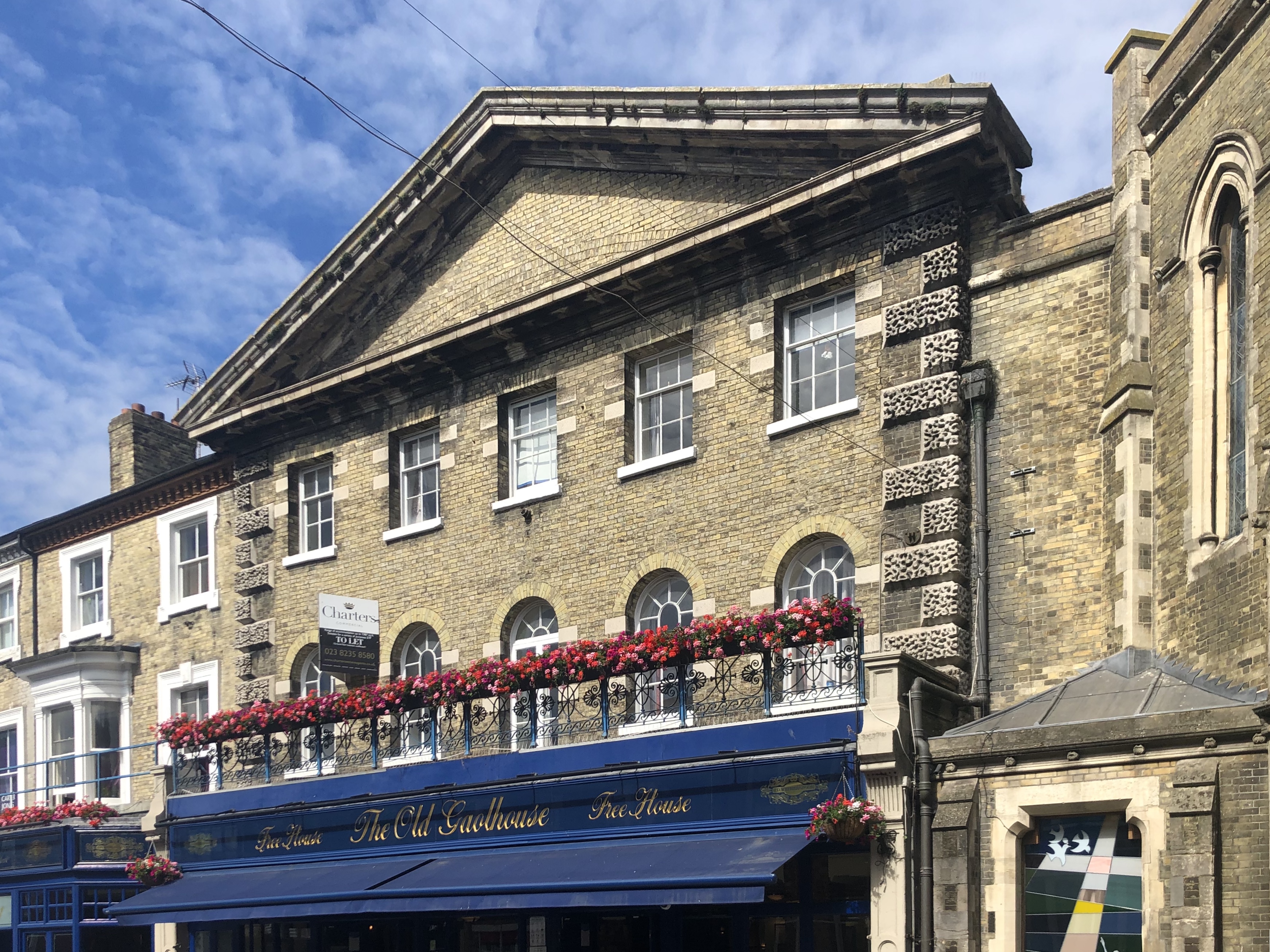
The Old Gaol house, built in 1805 as part of the new Winchester prison. Is an iconic Grade II Listed Building in the heart of Winchester.
Viewed across Jewry Street, The Old Gaol house opened as a public house in 1997 at ground floor level and prior to the conversion carried out by BJP Projects, the upper two floors and 1960’s rear extension had been an HMO with up to 32 students in occupation.
The public house is the former Governor's House, which was the central building in the old debtor's prison. It later became one of Britain's first libraries and, later still, an ironmonger’s and then a furniture store. The county gaol once stood immediately behind the furniture shop. The use of this site as a prison is thought to date from 1228. In 1805, accommodation at the gaol was improved by the building of a new prison for debtors along the street frontage. The very centre of this new building was the Governor's House. After a new prison opened in Romsey Road in 1849, The Old Gaol closed and was sold.
After it became apparent that it was no longer viable for the upper two floors to serve as a student HMO, due to overall dilapidation and maintenance issues as well as lack of demand, BJP Projects were first approached to provide architectural services to design a scheme for 15 luxury “micro apartments” to provide rental accommodation for working professionals. The proposed scheme was successfully navigated through Planning Control and Listed Building consent.
It was then requested by the building owner that BJP Projects took on the build phase and act as main Building Contractor.
As well as building out the proposed “micro apartments”, significant structural repair work was carried out both externally and internally, essentially saving the building.
The layout of the newly created units, adopt a minimalist contemporary design, whilst exposing the original fabric of the building, where possible.
The outcome of the project was a great success and all units were rented out immediately, with the majority of the units being reserved before the building works had been completed.